


Why Choosing the Right Pressure Calibrator Matters
Pressure measurement plays a critical role across pharmaceutical manufacturing, cleanrooms, industrial processing, utilities, oil and gas, and laboratory environments. Whether verifying a pressure transmitter, validating cleanroom overpressure conditions, or troubleshooting a process loop, technicians need pressure calibration equipment that matches the accuracy, range, and workflow requirements of the application.
Many pressure calibration projects are temporary in nature. Shutdowns, calibration cycles, compliance audits, and plant turnarounds often create short-term demand for specialized pressure calibration equipment that may not justify a permanent purchase.
Renting this equipment provides technicians and engineers with the flexibility to choose the pressure calibrator best suited to each project. Some applications benefit from highly automated calibrators, while others require modular systems that support multiple measurement disciplines. In other situations, a compact all-in-one pressure calibrator may be the most practical choice. Renting allows organizations to select the right tool for the job without committing to the cost of purchasing multiple instruments that may only be used occasionally.
Understanding the Three Main Pressure Calibrator Types
When evaluating pressure calibration equipment, most users will encounter three primary types: automated pressure calibrators, handheld multifunction modular calibrators, and all-in-one pressure calibrators.
Each category is designed to solve different challenges, and selecting the wrong type of calibrator can negatively impact efficiency, accuracy, and ease of use in the field. The rest of this article will explore these three types and how to choose the type that fits your needs.
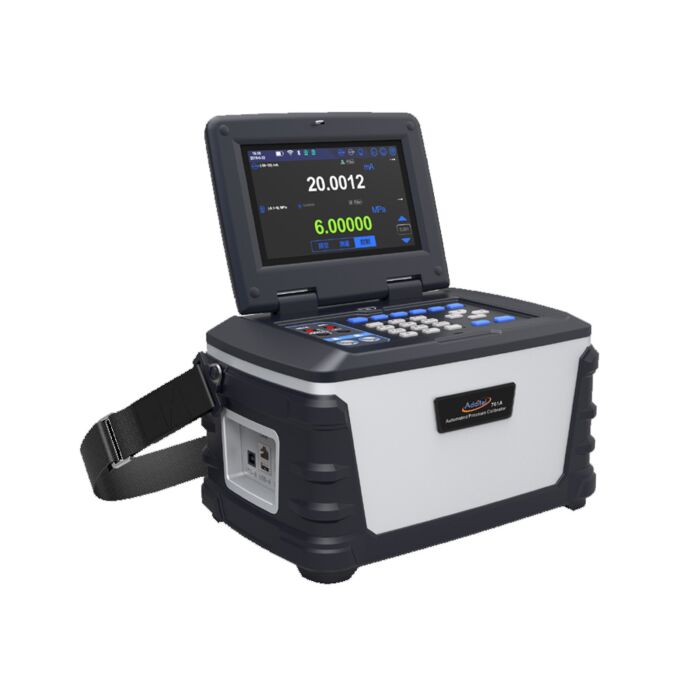
Automated Pressure Calibrators: Precision and Efficiency Combined
Automated pressure calibrators are designed to simplify calibration workflows by integrating pressure generation, control, measurement, and documentation into a single platform. Rather than relying on manual pumps and adjustments, users can enter a desired pressure value and allow the instrument to automatically generate and control pressure to the target setpoint.
One of the most versatile platforms in this category is the Additel ADT761A Automated Pressure Calibrator, a self-contained solution that combines integrated pressure generation, precision pressure control, pressure measurement, and documentation capabilities in a portable package. Available in multiple pressure ranges, the ADT761A can support applications ranging from low-pressure work to pressures up to 1,500 psi (100 bar). With removable pressure modules, automated pressure control, data logging, and communication capabilities, the ADT761A serves as a true workhorse for both field and lab pressure calibration activities. Accuracy specifications as low as 0.01% full scale make it well suited for demanding calibration requirements.
For applications where portability and low-pressure performance are especially important, the Additel ADT760 Series Automatic Pressure Calibrator offers another highly effective solution. Weighing less than four pounds and featuring a built-in electric pump, internal controller, and precision pressure sensor, the ADT760A allows technicians to generate and control pressure automatically by dimply entering a desired setpoint. The platform supports automated pressure generation and control, data logging, task management, optional HART communication, and external pressure modules. Its low-pressure configurations are particularly valuable for cleanroom differential pressure verification, and other applications requiring precise measurement of very small pressure changes. Available low-pressure modules can measure pressures down to fraction of an inch of water column, making the platform a strong choice when control stability, accuracy, and portability are critical.
For organizations prioritizing productivity, repeatability, and high accuracy, automated pressure calibrators can significantly reduce the time and effort required to perform routine calibrations while delivering precise and repeatable results across a broad range of pressure applications.
Modular Multi-function Calibrators: Flexibility for Multiple Disciplines
In many facilities, technicians are responsible for more than pressure calibration alone. They may also need to verify electrical signals, temperature inputs, transmitters, switches, and process instrumentation.
This is where modular multifunction platforms such as the Fluke 754 Documenting Process Calibrator with pressure modules and the Druck DPI620G Genii Multifunction Calibrator with interchangeable modules excel. Rather than serving as dedicated pressure instruments, these platforms function as configurable calibration workstations. By changing modules, users can adapt the instrument to support a wide variety of calibration tasks throughout the facility.
For companies maintaining diverse instrumentation assets, modular systems can reduce the number of individual instruments technicians need to carry into the field. This flexibility makes them particularly attractive for maintenance groups, utility technicians, and contract calibration providers who regularly encounter multiple signal types during a single visit.
All-in-One Pressure Calibrators: Simplicity for Everyday Calibration
Not every calibration task requires extensive automation or modular expandability. In many situations, technicians need a straightforward tool capable of sourcing pressure, measuring electrical signals, and performing common transmitter calibrations efficiently.
All-in-one models such as the Fluke 719Pro Electric Pressure Calibrator combine pressure generation and measurement capabilities within a single handheld instrument. These types of calibrators are often favored for routine work in the field because they are easy to deploy, require minimal setup, and support common pressure calibration tasks without additional accessories or modules.
For maintenance teams performing standard transmitter verification and troubleshooting activities, an all-in-one platform can provide a practical balance of functionality, portability, and ease of use.
Matching the Pressure Calibrator to the Application
The best pressure calibrator depends on the requirements of the job.
Applications involving highly accurate differential pressure measurements, cleanroom overpressure testing, or demanding process calibrations often benefit from automated platforms such as the Additel ADT760 Series. Facilities seeking a flexible, multidisciplinary calibration solution may prefer modular platforms such as the Fluke 754 or Druck DPI620G. Meanwhile, technicians performing routine pressure calibrations in the field may find that an all-in-one instrument such as the Fluke 719Pro provides all the functionality required without unnecessary complexity.
By evaluating factors such as pressure range, required accuracy, automation needs, portability, and measurement versatility, users can select a pressure calibration solution that aligns with both current and future requirements.
Why Renting Pressure Calibrators from Transcat Makes Sense
Renting pressure calibrators from Transcat | Axiom Rentals provides access to calibration equipment without the capital investment associated with ownership. Rental equipment offers immediate availability when schedules are tight and helps organizations avoid downtime when existing equipment is out for calibration or repair. In addition, our rental team is trained in product selection and can help identify the most appropriate pressure calibration solution for your application, ensuring you have the right equipment to meet your project requirements.
Whether you need an automated pressure calibrator, a multifunction calibrator platform, or an all-in-one solution, Transcat | Axiom Rentals can help you identify the right equipment for your next pressure calibrator needs. Contact our rental team today to discuss your application, compare available pressure calibrators, and find the solution best suited to your calibration requirements.