


Why Electrical Commissioning is Critical Before Go-Live
Bringing a new data center online is one of the most demanding phases of any infrastructure project. Before servers begin processing data and customers start relying on uptime commitments, engineers and technicians must verify that every electrical system performs as designed. Utility feeds, switchgear, generators, UPS (Uninterruptible Power Supply) systems, battery strings, and power distribution infrastructure must all be tested under realistic operating conditions.
Even a minor power quality issue, an undetected thermal hotspot, or improperly configured backup system can create reliability risks that may not appear until the facility is under load. To reduce these risks, commissioning teams rely on specialized power testing equipment, including power supplies, electronic loads, power quality analyzers, data acquisition systems, and thermal imaging technology, to validate system performance before the data center goes live.
What are Common Challenges During Data Center Startup?
Data center commissioning involves much more than confirming that power is present. It is one of the most complex phases of a construction project because multiple power systems must be evaluated simultaneously under realistic operating conditions. Teams must prove that the electrical infrastructure can withstand expected loads, transfer seamlessly between normal and emergency power sources, and operate within strict voltage and harmonic tolerances. Backup generators must synchronize correctly, UPS systems must react appropriately to disturbances, and battery banks must deliver the required runtime.
At the same time, commissioning personnel are often working against aggressive project schedules and coordinating multiple contractors, making testing efficiency a major concern. Without the proper test instrumentation, identifying hidden issues before startup can become both time-consuming and costly.
What is Essential Test Equipment for Data Center Power Validation?
One of the first priorities during commissioning is establishing a clear picture of overall power quality. The Fluke 1777 Power Quality Analyzer enables engineers to evaluate harmonics, voltage sags, swells, transients, and other electrical disturbances that may impact sensitive data center equipment. By identifying power quality concerns before occupancy, teams can correct issues proactively and establish baseline performance metrics for future troubleshooting.
Validating the interaction between power infrastructure and utility conditions is equally important. The Chroma 61800-100 Grid Simulator provides a programmable AC power source capable of reproducing utility events and grid conditions in a controlled environment. This capability allows engineers to evaluate UPS systems, power conversion equipment, and other critical infrastructure under simulated operating scenarios without introducing risk to production systems. For commissioning teams, the ability to recreate real-world disturbances can provide valuable insight into how systems will respond after deployment.
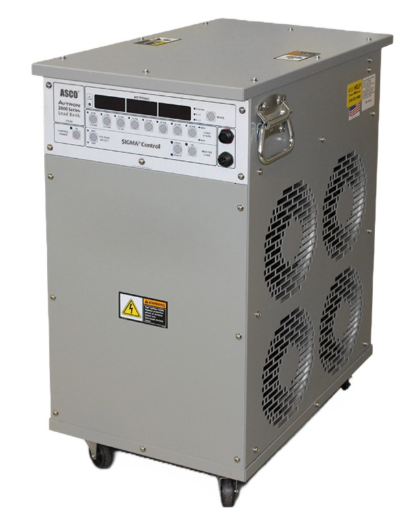
Load testing remains one of the most important acceptance activities during the commissioning process. The Avtron 2705 Load Bank allows technicians to apply realistic electrical loads to generators, UPS systems, and power distribution equipment. Rather than simply verifying that equipment energizes correctly, load testing demonstrates that critical infrastructure can operate under expected demand levels. This process helps uncover cooling issues, control system problems, and performance gaps before they can affect facility operations.
Although most commissioning activities focus on AC infrastructure, modern data centers also depend on reliable DC-powered systems within battery-backed architectures. The Magna-Power MTD600-240 DC Power Supply provides programmable DC output for validating battery systems, DC distribution equipment, and supporting power electronics. By allowing engineers to simulate operating conditions and verify system responses, programmable power supplies help ensure that backup power resources will perform as designed during utility interruptions.
Comprehensive documentation is another critical aspect of successful commissioning. The Hioki MR8847A Memory Recorder offers a portable solution for collecting and recording voltage, current, temperature, and transient-event data across multiple channels. During integrated systems testing, portable data acquisition tools provide engineers with actionable insights while creating detailed records that support acceptance testing and future maintenance activities.
Thermal inspections serve as the final layer of verification before a facility enters production service. The FLIR E96 Thermal Camera enables technicians to identify loose electrical connections, overloaded breakers, unbalanced phases, and abnormal heating patterns that may not be visible during conventional inspections. Detecting these issues before the facility becomes operational can significantly reduce the risk of downtime and improve long-term reliability.
Why Renting Test Equipment from Transcat | Axiom Rentals Makes Sense
For many commissioning projects, renting test equipment from Transcat | Axiom Rentals is the most practical and cost-effective approach. Renting reduces capital expenditures and lowers upfront costs while still providing access to industry-leading, calibrated equipment. Transcat also offers fast, reliable delivery, flexible rental terms, and personalized equipment selection.
Ensure Your Data Center Success
Successful data center commissioning depends on thorough and rigorous electrical testing before go-live. By leveraging power quality analyzers, programmable power supplies, electronic loads, DAQ systems, and thermal imaging equipment, engineers can validate system performance, identify issues early, and gain confidence that every critical power system is ready for service.