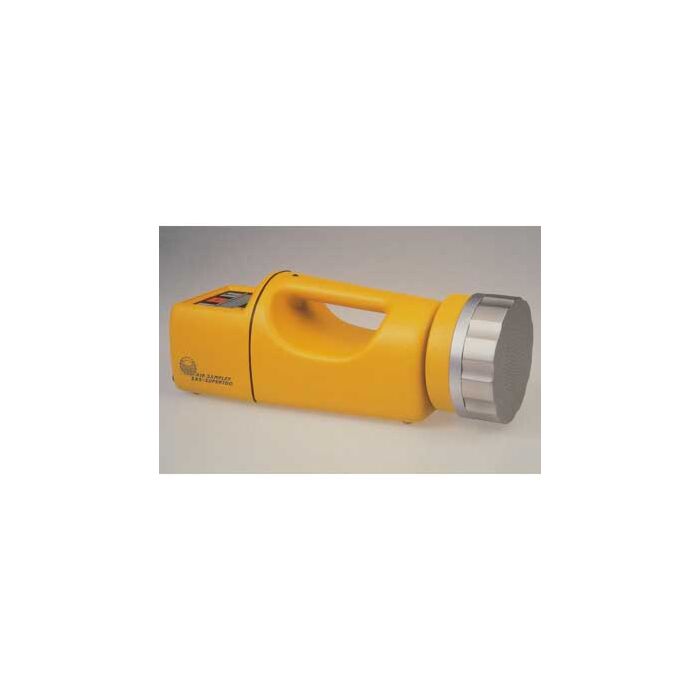
Bioscience International SAS SUPER 180 for Rent, Microbial Air Sampler 180 L/min, Viable
Order #SAS-SUPER-180-RENT1|Mfg #SAS-SUPER-180-RENT1
For Rent
Supports established environmental-monitoring standards and guidance - including the applicable sampling-performance and method expectations of EN 17141, ISO 14698, USP <1116>, USP <797>, and EU GMP Annex 1.
Fast sampling time - the SAS Super 180 collects 1,000 liters of air in approximately 5.5 minutes. Faster collection can reduce operator time when sampling multiple rooms or locations.
Low running cost and media flexibility - no need to purchase expensive proprietary media strips, cassettes, or plates. The SAS Super supports standard 55-65 mm contact plates or 90-100 mm Petri dishes with the appropriate sampling head or adapter.
Have a Question? Speak to a Transcat Rental Expert: 800.264.4059
Have a Question?
Speak to a Transcat Rental Expert at 800.264.4059
Tariff fees or manufacturer imposed surcharges may be applicable.
Overview
The SAS Super 180 microbial air samplers provide portable, independently validated performance at 180 L/min and support standard media, as well as programmable interval sampling for continuous monitoring applications.
(Note that air sampling of 180 liters per minute is the fastest rate available on the market that is fully validated as safe & effective for the collection & growth of microorganisms.)
The SAS Super 180 is widely used in pharmaceutical and medical device manufacturing, compounding pharmacies, hospitals, food and beverage production, and other cleanroom environments where reliable microbial monitoring is essential. The SAS Super is compatible with 21 CFR Part 11-compliant environmental-monitoring SOPs, with an optional Password Mode that can fully lock down the sampler and ensure a fixed sampling volume.
SAS air samplers can use standard 55-65 mm contact plates or 90-100 mm Petri dishes - with no lock-in to proprietary media types. Customers may choose to use pre-sterilized disposable sampling heads or autoclavable AISI 316 stainless steel heads, whichever is easiest for their organizations' operations.
Supports established environmental-monitoring standards and guidance - including the applicable sampling-performance and method expectations of EN 17141, ISO 14698, USP <1116>, USP <797>, and EU GMP Annex 1.
NIST-traceable, ISO/IEC 17025:2017 accredited calibration certificate with each unit - Bioscience International calibrates the sampler to verify actual airflow and provide traceability tied to international standards. IQ/OQ services and other validation documentation are also available upon request.
Fast sampling time - the SAS Super 180 collects 1,000 liters of air in approximately 5.5 minutes. Faster collection can reduce operator time when sampling multiple rooms or locations.
Low running cost and media flexibility - no need to purchase expensive proprietary media strips, cassettes, or plates. The SAS Super supports standard 55-65 mm contact plates or 90-100 mm Petri dishes with the appropriate sampling head or adapter.
Third-party validated collection performance - SAS 180 configurations have independently measured physical and biological collection efficiency, including d50 values below 2 microns that support the applicable collection-performance requirements of EN 17141 and ISO 14698.
Long-life rechargeable battery - supports sampling of more than 40,000 liters of air per charge, depending on flow rate and operating conditions. The non-lithium battery chemistry enables safe transportation, and a fast-charging option is available.
Sampling-activity traceability - stores the date, time, sampling site, sampled air volume, and operator identification for completed sampling activities.
Easy to use, even with gloves - large back-lit screen with an intuitive menu, active sampling status confirmed by flashing red LEDs, and a lightweight yet durable approximately 1.7 kg construction. Its keypad is not touchscreen-based, which means operators do not have to remove their gloves and risk contamination to use the device.
Flexible data transfer and reporting for regulated workflows - sampling records can be transferred to a PC through an RS-232 connection using related software or printed to a compatible RS-232-style receipt printer. Units ordered with the optional USB-C configuration can also transfer records to a PC and export encrypted PDF files to a USB drive. These capabilities can be incorporated into GLP/GMP and 21 CFR Part 11-compliant processes when supported by appropriately designed and implemented SOPs, validation, access controls, and record-management practices.
Optional Password Mode for fixed-method control – Bioscience International can enable Password Mode on compatible units with firmware 7.04 or later, generally during routine calibration service at no additional charge. Older units (prior to 2018) may require a PC-board upgrade. Once the optional SAS Password Mode is enabled and configured, an operator without the password can only: power the unit on, press START to run the same sampling volume programmed before Password Mode was activated, and power the unit off. All menus, parameter changes, and other functions remain locked. This optional feature prevents unauthorized changes to a validated sampling method, while still allowing operators to perform routine approved samples with ease.
Autoclavable and disposable sampling-head options - reusable AISI 316 stainless-steel heads can be autoclaved, and sterile single-use daily heads are available for programs that prefer to reduce handling and autoclave requirements.
Six selectable interface languages - English, German, Spanish, French, Italian, and Portuguese.
Interval sampling, delayed start, and optional remote control - programmable start delay, interval-based sampling to support continuous monitoring requirements, customizable total aspiration volume, and optional infrared remote operation support flexible unattended monitoring.
Durable construction and long-term support - molded polyresin housing is designed for long operational life, and Bioscience International provides ISO 17025 accredited calibration, repair, preventative maintenance, replacement parts, and application support throughout the life of the instrument.
What the SAS Super Records - and What It Does Not
The SAS Super records the circumstances of the air-sampling activity, including the date, time, operator identification, sampling site, and sampled air volume. This information provides traceability showing who performed sampling, where and when it occurred, and how much air was collected.
The actual microbiological test result data is generated outside the instrument. After sampling the agar plate is removed, incubated, and evaluated to determine whether microorganisms grew and, when required, which organisms were identified. The SAS Super therefore does not itself generate or store the final microbial-growth result data.
This distinction is important when evaluating 21 CFR Part 11 requirements. The SAS Super's recordkeeping, transfer, printing, and optional encrypted-PDF capabilities support a controlled electronic-record process, while the laboratory's SOPs and validated systems address activities that happen after the air sampling is completed: incubation, colony counting, organism identification, review, approval, and retention of the complete microbiological result.
Frequently Asked Questions
How can the SAS Super support a 21 CFR Part 11-compliant environmental monitoring process?
Should I select the SAS Super 100 or SAS Super 180?
Both configurations use the same equipment platform and are currently priced the same, so the choice should be based on the end user's desired sampling method and workflow rather than price.
Bioscience International generally recommends the faster 180 L/min flow to reduce operator labor time, especially for: 1,000 L or larger samples, frequent sampling, or work across multiple rooms or locations. A 1,000 L sample takes approximately 5.5 minutes at 180 L/min, versus approximately 10 minutes at 100 L/min.
The 100 L/min configuration is best when an existing SOP or validated historical method requires 100 L/min, or when interval-based continuous monitoring is being performed and slower airflow can help media remain usable for longer before drying.
The SAS Super records sampling metadata and supports PC transfer, printing, and optional encrypted PDF export depending on configuration. Optional Password Mode adds a technical access and authority control: a person without the password can only power on the sampler, run the previously authorized sampling volume, and power it off; menus and parameter changes remain locked. These functions can be incorporated into a 21 CFR Part 11-compliant process when paired with appropriately designed and validated SOPs and controls for password custody, operator attribution, record review, retention, backup, and management of the offline microbiological results.
How can SAS Super sampling records be transferred?
The SAS Super can transfer sampling records to a PC through an RS-232 connection using related software or can print to a compatible RS-232-style receipt printer. Units ordered with the optional USB-C configuration can also transfer records to a PC and export encrypted PDF files to a USB drive.
Can the SAS Super use standard microbiological media?
Yes, the SAS Super 100 and SAS Super 180 support standard 55-65 mm contact plates or 90-100 mm Petri dishes with the appropriate sampling head or adapter. Reusable stainless-steel heads and sterile single-use daily heads are available. All ISO 17025 accredited calibrations performed by Bioscience International are done with the end user's exact media type when it is provided, helping ensure consistency between calibration and actual operational use.