Crystal XP2i vs XP3i: A Comprehensive Digital Pressure Gauge Comparison Guide

Crystal XP2i vs XP3i: A Comprehensive Digital Pressure Gauge Comparison Guide

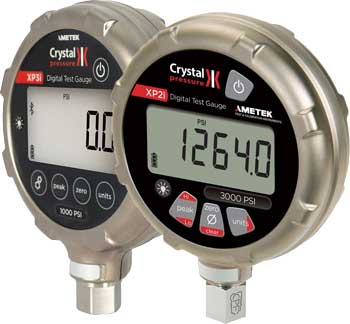
The Crystal XP2i and XP3i are ultra-rugged, intrinsically safe digital pressure gauges from Crystal Engineering (part of Ametek) that are widely used for pressure calibration and testing in various industries. The XP2i has long been known as one of the world’s most popular digital test gauges, prized for its durability and 0.1% of reading accuracy. Its successor, the XP3i, builds on that legacy with enhanced accuracy, connectivity, and features. In this guide, we’ll compare the Ametek Crystal XP2i vs XP3i in detail, including a feature-by-feature comparison table, key differences (pressure range, accuracy, interface, battery, Bluetooth), use case examples in industries like oil & gas and aerospace, and an FAQ addressing common questions. Whether you’re upgrading an intrinsically safe pressure gauge or deciding which model fits your needs, this guide will help you make an informed choice.

Feature Comparison Table: XP2i vs XP3i

Feature

Crystal XP3i

Crystal XP2i

Pressure Range

Vacuum to 15,000 psi /
1000 bar
Vacuum to 15,000 psi /
1000 bar

Accuracy (1 year)

±0.02% FS (0–40% of
range) / ±0.05% of
Reading (40–110% of
range)
±0.02% FS (0–20% of
range) / ±0.1% of Reading
(20–110% of range)

Temp. Compensated Range

–20 to 50 °C (–4 to 122 °F) –10 to 50 °C (14 to 122 °F)

Battery Life

~1500 hours (3 × AA
alkaline, up to ~2000 in
ideal conditions)
~1500 hours (3 × AA
alkaline)

Digital Interface

USB Type-C (modern PC
connectivity)
RS-232 (DB-9 serial port)

Bluetooth Wireless

Yes – Bluetooth Low
Energy 5.4 built-in
No

Mobile App Support

Yes – CrystalConnect™
mobile app 
No 

Intrinsic Safety Cert.

ATEX, IECEx, CSA (Zone 0
hazardous areas)
ATEX, IECEx, CSA certified

Shock & Vibration

Drop tested (10 ft onto
steel with boot), MIL-STD-
Extremely rugged; not
formally MIL rated

Rating

810H and IEC 60068  

Display & Backlight

Large, high-contrast LCD;
brighter backlight
Standard LCD with
backlight

Protective Boot

Optional IS-certified boot
(static dissipative)
Optional boot (fits but not
IS-rated)

Data Logging

Yes – with
CrystalControlWeb™ /
CrystalConnect
Yes – with DataLoggerXP
upgrade

Memory Capacity

Over 200 million data
points (with logging option)
~32,000 data points (with
logging option)

Fastest Logging Interval

0.2 seconds (5 readings
per second)
1 second (1 reading per
second)

Cloud/Web Integration

Yes – CrystalControlWeb™
support
No

Remote Start/Stop

Yes – via mobile app
(Bluetooth)
No

Key Differences Between the XP2i and XP3i

  • Pressure Range: Both models now support up to 15,000 psi. Previously, the XP3i launched with 10,000 psi max, but updated
    models are available at 15,000 psi, aligning both ranges.
  • Accuracy: XP3i provides ±0.05% of reading vs XP2i’s ±0.1%. It also extends the ±0.02% FS portion over 0–40% (XP2i covers 0–20%).
  • Digital Interface: XP3i uses USB-C, while XP2i uses RS-232.
  • Battery Life: Both provide ~1500 hours, with XP3i sometimes reaching ~2000 hours.
  • Bluetooth Connectivity: XP3i includes Bluetooth + mobile app support; XP2i has none.
  • Display/Usability: XP3i has a larger, brighter display and refined interface. XP2i is simpler but still easy to operate.
  • Data Logging & Memory: XP2i logs up to 32k points with DataLoggerXP. XP3i logs over 200 million points with CrystalControlWeb/CrystalConnect and supports remote/cloud access.

Use Case Examples

  • Oil & Gas: Intrinsically safe operation in hazardous zones; XP3i’s Bluetooth adds remote monitoring advantages.
  • Aerospace/Defense: Both withstand vibration; XP3i offers tighter accuracy and Skydrol compatibility. Includes ISO 17025 calibration certificate (XP2i typically ships NIST-traceable, ISO 17025 available by request — confirm with supplier).
  • Utilities: Both IP67 rated and durable; XP3i carries formal drop-test certification.
  • Calibration Labs: Both serve as reference standards; XP3i provides tighter uncertainty budgets, larger memory, and cloud software integration.

Frequently Asked Questions (FAQ)

Q: Are the XP2i and XP3i gauges intrinsically safe?
Yes. Both are certified Intrinsically Safe (ATEX, IECEx, CSA). Use only specified battery types to maintain IS certification.


Q: Can I use XP2i accessories/software with XP3i?
- Accessories: Mostly yes (CPF fittings, cases, straps). XP3i requires the newer IS-certified protective boot.
- Software: No. XP2i uses ConfigXP/DataLoggerXP. XP3i requires CrystalControlWeb and CrystalConnect.


Q: What are the differences in data logging?
- XP2i: 32,000 points max, 1 sample/sec min interval.
- XP3i: 200+ million points, 0.2 sec min interval, with Bluetooth/cloud download.


Q: Do both come with calibration certificates?
Yes. XP3i always ships with ISO 17025 accredited certificates. XP2i typically ships with NIST-traceable; ISO 17025 may be optional depending on distributor.


Q: How do the displays differ?
XP3i has a larger, brighter LCD with more contrast and on-screen Bluetooth/logging menus. XP2i is simpler, but both maintain straightforward, button-driven interfaces.

Conclusion

Both the Crystal XP2i and XP3i are excellent digital pressure gauges known for ruggedness and precision. The XP2i remains a proven workhorse with simple operation and durability. The XP3i enhances this with tighter accuracy, Bluetooth, USB-C, cloud integration, and vastly expanded data logging. For new applications, XP3i is generally the preferred choice, but XP2i continues to serve reliably across industries. Choosing between them depends on whether advanced connectivity and higher accuracy are critical to your workflows.